
Many businesses believe growth comes from reaching more people.
So they try to appeal to:
- everyone,
- every age group,
- every customer type,
- every industry,
- every budget level.
Their thinking is simple:
“If more people relate to our brand, we’ll get more customers.”
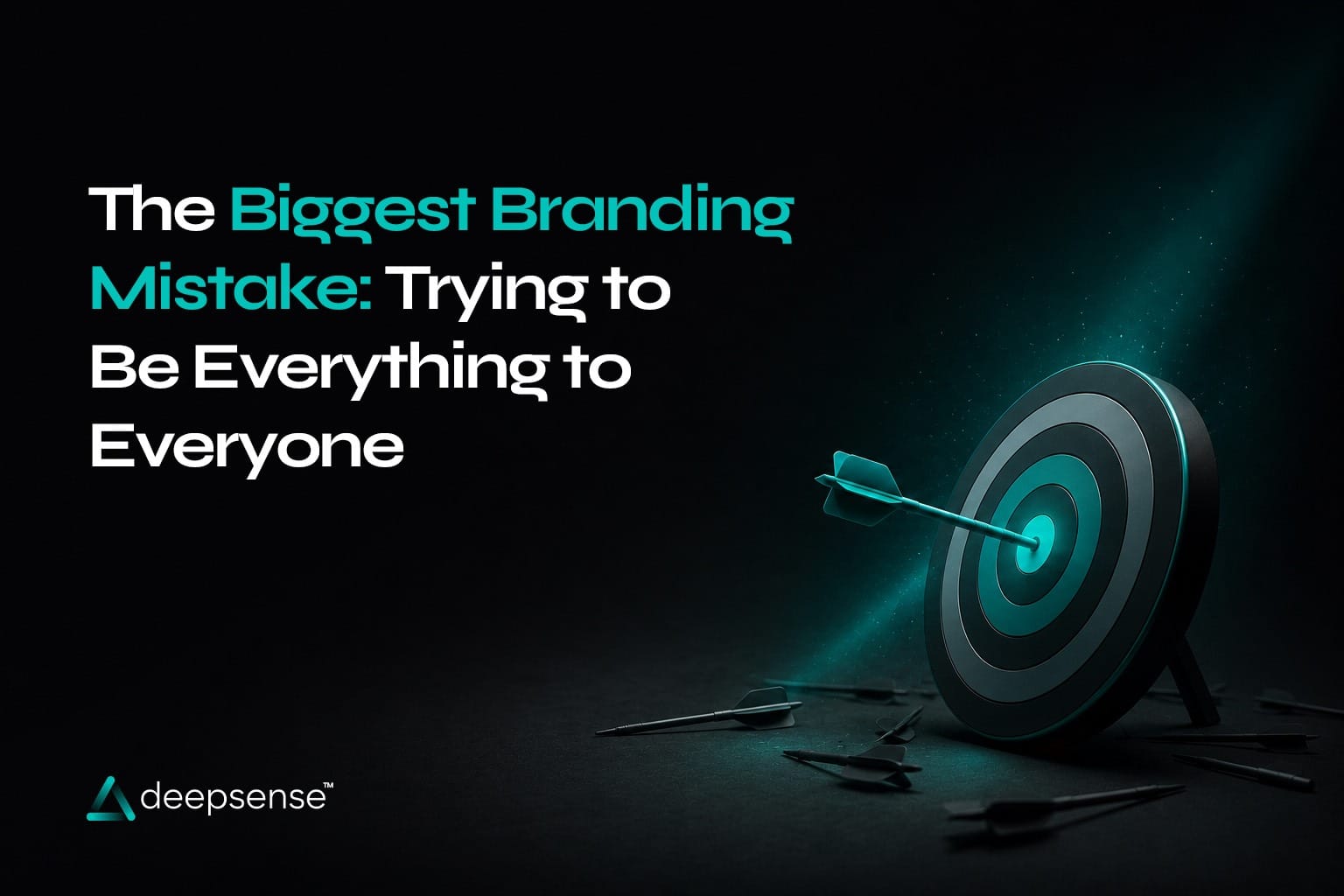
But in reality, one of the fastest ways to weaken a brand is trying to be relevant to everyone.
Because when a brand tries to speak to everyone, it usually ends up saying nothing meaningful to anyone.
This is one of the most common branding mistakes businesses make.
And it is often the reason why some brands struggle to stand out while others become category leaders.
Why Businesses Fall Into This Trap
The fear is understandable.
Most business owners worry that narrowing their audience means losing potential customers.
They think:
- “What if we miss opportunities?”
- “What if another audience buys from us?”
- “What if being too specific limits growth?”
So they create broad messaging that tries to attract everyone.
The result?
Generic branding.
And generic brands are easily ignored.
The Real Purpose of Branding
Many people think branding is about:
- logos,
- colors,
- taglines,
- design.
But branding is really about perception.
It’s about answering one critical question:
Why should customers choose you instead of someone else?
A strong brand positioning strategy gives customers a clear answer.
A weak positioning strategy creates confusion.
Customers Don’t Buy Brands They Don’t Understand
Imagine seeing these two messages:
Brand A
“We provide solutions for everyone.”
Brand B
“We help small businesses generate more leads without increasing ad spend.”
Which brand feels clearer?
Which brand feels more relevant?
Most people choose Brand B.
Because specificity creates trust.
Clarity creates confidence.
And confidence influences purchasing decisions.
Why Being Broad Weakens Your Brand
When businesses try to appeal to everyone, several problems emerge:
Unclear Messaging
Customers don’t know what the brand truly stands for.
Weak Differentiation
The brand sounds like every competitor.
Lower Engagement
People struggle to see how the message relates to them.
Reduced Recall
Generic brands are harder to remember.
This directly impacts brand differentiation.
The Most Successful Brands Are Focused
Look at strong brands across industries.
They are rarely known for everything.
They’re known for something specific.
Customers immediately associate them with:
- a problem,
- a benefit,
- a category,
- a unique value.
This clarity is what creates strong market positioning.
Why Niche Doesn’t Mean Small
One of the biggest misconceptions about branding is that niche means limited.
In reality, many of the world’s strongest brands started by serving a very specific audience exceptionally well.
A strong niche marketing strategy helps businesses:
- attract the right customers,
- build authority,
- increase trust,
- create stronger word-of-mouth.
Focus often leads to growth.
Not limitation.
The Psychology of Customer Relevance
People naturally pay attention to messages that feel personally relevant.
When customers see content that reflects:
- their challenges,
- their goals,
- their situation,
they engage more.
This is why target audience branding is so effective.
Customers want to feel understood.
Not marketed to.
What Happens When Brands Try to Please Everyone
Trying to satisfy every audience often creates contradictions.
For example:
A brand tries to be:
- premium and affordable,
- professional and playful,
- luxury and mass-market,
- exclusive and accessible.
Eventually, customers become confused.
And confused customers rarely buy.
The Power of Customer Segmentation
This is where customer segmentation strategy becomes essential.
Different audiences have different:
- motivations,
- expectations,
- buying behaviors,
- priorities.
Instead of using one message for everyone, successful brands adapt communication for specific segments.
This creates stronger relevance without weakening the core brand.
Brand Positioning Examples That Show the Power of Focus
Let’s look at simple brand positioning examples.
Example 1: Fitness Brand
Weak Positioning:
“We help everyone get healthier.”
Strong Positioning:
“We help busy professionals stay fit in under 30 minutes a day.”
The second message is clearer and more memorable.
Example 2: Marketing Agency
Weak Positioning:
“We provide marketing services for all businesses.”
Strong Positioning:
“We help local businesses generate qualified leads through SEO.”
Again, specificity creates differentiation.
Why Audience Targeting Creates Stronger Brands
Effective audience targeting allows businesses to:
- speak directly to customer needs,
- create more relevant messaging,
- improve conversion rates,
- strengthen customer trust.
Instead of competing for everyone’s attention, they focus on the people most likely to benefit.
This increases marketing efficiency dramatically.
The Difference Between Excluding and Focusing
Many businesses fear that focus means exclusion.
It doesn’t.
A focused brand can still serve multiple audiences.
The difference is that it communicates from a position of clarity.
Strong brands know:
- who they primarily serve,
- what problem they solve,
- why they’re different.
Everything else becomes easier after that.
Why Brand Differentiation Matters More Than Ever
In 2026, customers have endless choices.
Most industries are crowded with similar products and services.
This means visibility alone isn’t enough.
Brands need a reason to stand out.
That reason comes from brand differentiation.
And differentiation is impossible when a brand tries to be everything to everyone.
Signs Your Brand Positioning Is Too Broad
Ask yourself:
Can customers explain what makes us different?
Do we know our ideal audience clearly?
Does our messaging feel specific or generic?
Would customers immediately recognize our expertise?
If the answers are unclear, your positioning may need refinement.
The Best Brands Make Trade-Offs
Strong brands understand an important principle:
Every positioning decision includes a trade-off.
You can’t be:
- the cheapest,
- the fastest,
- the most premium,
- the most innovative,
all at the same time.
Choosing what you stand for is what creates strength.
The Future of Branding Is Relevance
As AI-generated content and digital advertising continue to increase, consumers are becoming more selective.
Generic messaging is easier to ignore than ever.
The brands that grow will be the ones that:
- understand their audience,
- communicate clearly,
- maintain focus,
- deliver relevance.
Because relevance creates connection.
And connection creates growth.
Questions Every Brand Should Ask
Before creating your next campaign, ask:
- Who are we really for?
- What problem do we solve best?
- Why should customers choose us?
- What do we want to be known for?
The answers define your positioning.
Final Takeaway
One of the biggest branding mistakes businesses make is trying to appeal to everyone.
It feels safe.
But it often creates:
weak messaging
low differentiation
customer confusion
reduced engagement
The strongest brands use a clear brand positioning strategy.
They focus on:
a specific audience
a specific value proposition
a specific problem they solve
Because successful branding isn’t about being relevant to everyone.
It’s about being unforgettable to the right people.
And in today’s competitive market, focused brands almost always outperform broad ones.
FAQs
1. What is a brand positioning strategy?
A brand positioning strategy defines how a brand wants to be perceived in the market and what makes it different from competitors.
2. Why is trying to market to everyone a branding mistake?
Marketing to everyone often creates generic messaging, weak differentiation, and lower customer engagement because the message lacks relevance.
3. How does customer segmentation improve branding?
Customer segmentation allows brands to create targeted communication that better addresses specific audience needs and preferences.
4. What is the benefit of a niche marketing strategy?
A niche marketing strategy helps businesses build authority, increase relevance, improve customer trust, and stand out from competitors.
5. How does audience targeting strengthen brand positioning?
Audience targeting ensures that marketing messages reach the people most likely to connect with the brand, improving engagement and conversion rates.
6. Why is brand differentiation important in 2026?
With increasing competition and content overload, brand differentiation helps businesses stand out, attract attention, and build long-term customer preference.