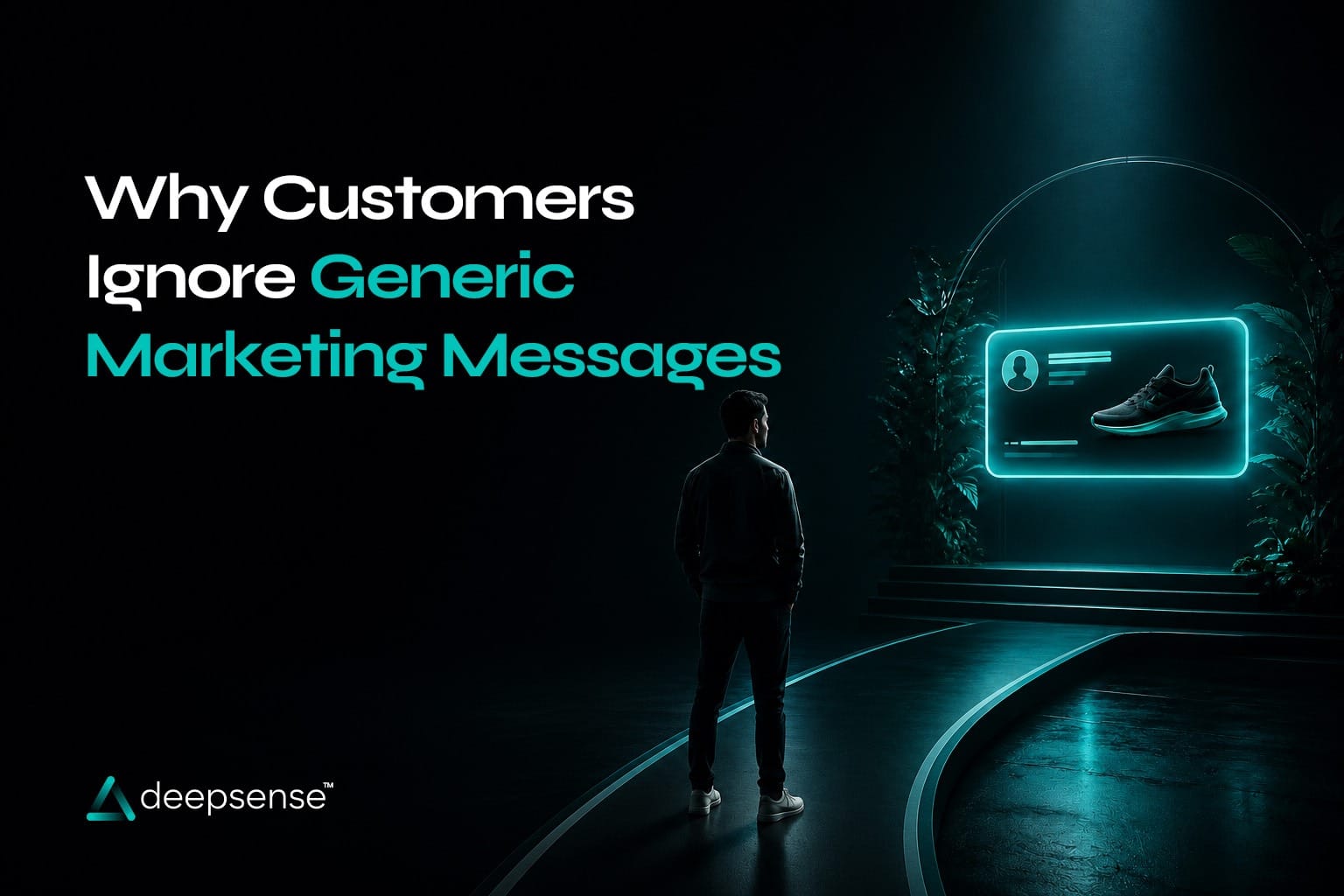
Every day, customers are exposed to thousands of ads, emails, social media posts, and promotional messages.
Most of them are ignored.
Not because the products are bad.
Not because the businesses lack quality.
But because the message sounds exactly like every other message competing for attention.
Statements like:
have become so common that customers barely notice them anymore.
This is one of the biggest challenges in modern marketing. Brands spend time creating content, running ads, and launching campaigns, only to wonder why people aren’t responding.
The answer often lies in the messaging itself.
If your communication feels generic, customers simply tune it out.
Understanding why this happens is essential for creating effective marketing messages that capture attention, build trust, and drive action.
Twenty years ago, businesses had fewer competitors fighting for customer attention.
Today, consumers scroll through:
every single day.
As a result, people have become experts at filtering information.
Their brains quickly decide:
If the answer is unclear, they move on.
This is why generic messaging struggles to perform in today’s digital environment.
Generic messages are usually broad, vague, and interchangeable.
In many cases, if you remove the company logo, customers wouldn’t know which brand created the message.
That’s a problem.
Because branding is not about being recognized after someone sees your logo.
It’s about being recognized before they see it.
One of the most common generic marketing mistakes is trying to create a message that appeals to everyone.
The result is often a message that resonates with no one.
Many marketers assume their job is to communicate information.
But customers don’t buy information.
They buy solutions.
They buy outcomes.
They buy value.
For example:
Instead of saying:
“We offer digital marketing services.”
A stronger message might be:
“We help local businesses generate qualified leads without increasing advertising spend.”
The second message immediately feels more relevant because it addresses a specific audience and a specific outcome.
This is where a strong brand messaging strategy makes a difference.
The answer lies in psychology.
Our brains constantly process enormous amounts of information.
To conserve energy, they prioritize messages that appear relevant.
This principle plays a major role in customer psychology in marketing.
People naturally pay attention to things that relate to:
Generic messages fail because they don’t trigger that relevance filter.
Most customers subconsciously ask:
“Why should I care?”
If your message doesn’t answer that question quickly, attention disappears.
Consider these examples.
“We provide innovative business solutions.”
“We help growing startups automate repetitive tasks and save up to 10 hours per week.”
The second message immediately feels more personal.
It creates context.
It creates relevance.
And relevance drives engagement.
One of the simplest ways to improve marketing communication strategy is to become more specific.
Specificity helps customers:
Generic language often sounds like marketing.
Specific language sounds like understanding.
Strong messaging starts with understanding who you’re speaking to.
This is where audience targeting strategy becomes essential.
Before creating a message, ask:
Without these answers, messaging usually becomes vague.
With them, messaging becomes meaningful.
Consumers increasingly expect brands to understand their needs.
That’s why personalized marketing continues to outperform one-size-fits-all communication.
Personalization doesn’t necessarily mean using someone’s name in an email.
It means creating messages that feel relevant to their situation.
For example:
A fitness brand may communicate differently with:
The product may be similar.
The message changes because the audience changes.
Many businesses focus their messaging on features.
Examples:
While these matter, customers care more about outcomes.
They want to know:
The strongest marketing messages connect features to benefits and benefits to outcomes.
People often think purchases are purely rational.
Research consistently shows that emotions play a significant role in decision-making.
Customers respond to messages that make them feel:
This is a key principle of customer engagement marketing.
Emotion creates attention.
Attention creates memory.
Memory influences decisions.
You may have a messaging problem if:
These are often indicators that your message lacks specificity.
A practical framework is:
Who are you speaking to?
What challenge are they facing?
What result do they want?
How do you help them achieve it?
This approach creates messaging that feels relevant rather than generic.
“We provide business consulting services.”
“We help small business owners improve profitability through operational efficiency and growth planning.”
“We offer marketing solutions.”
“We help e-commerce brands increase conversions through SEO and performance marketing.”
The difference is clarity.
And clarity drives action.
When every business says:
customers struggle to see meaningful differences.
This weakens brand positioning.
Strong messaging creates distinction.
Weak messaging creates similarity.
And similarity rarely wins competitive markets.
As AI-generated content becomes more common, customers will be exposed to even more generic messaging.
This makes relevance more valuable than ever.
The brands that succeed will be those that:
In other words, they’ll sound less like marketers and more like experts.
Before publishing your next ad, email, or social media post, ask:
If not, the message may need refinement.
Customers don’t ignore marketing because they dislike marketing.
They ignore marketing that feels irrelevant.
The biggest generic marketing mistakes happen when brands focus on what they want to say instead of what customers need to hear.
Effective marketing messages are:
specific
relevant
audience-focused
outcome-driven
emotionally meaningful
Because in today’s crowded digital landscape, attention isn’t earned by being louder.
It’s earned by being more relevant.
And the brands that communicate relevance best are the brands customers remember, trust, and ultimately choose.
Customers ignore generic marketing messages because they often lack relevance, specificity, and clear value. People pay attention to messages that directly address their needs and goals.
Common mistakes include using vague language, trying to appeal to everyone, focusing on features instead of outcomes, and failing to differentiate from competitors.
Personalized marketing creates more relevant experiences by addressing specific audience needs, challenges, and interests, leading to higher engagement and conversion rates.
A brand messaging strategy defines how a company communicates its value, positioning, and benefits to its target audience in a clear and consistent way.
Audience targeting helps businesses deliver relevant messages to specific customer groups, improving engagement, trust, and marketing effectiveness.
Businesses can improve messaging by identifying their target audience, understanding customer problems, focusing on outcomes, and communicating clear value propositions.