
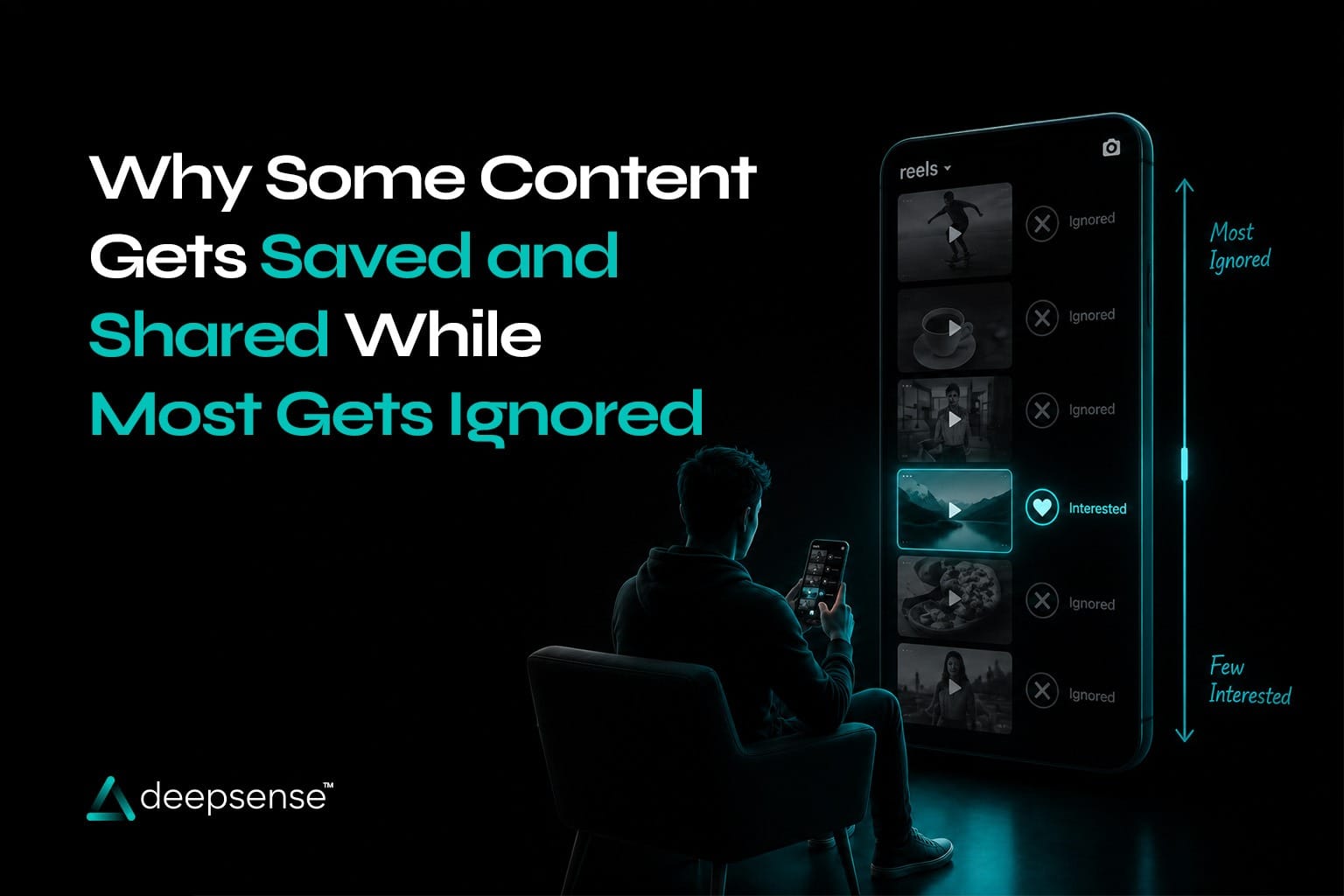
Every day, millions of posts are published across:
- Instagram,
- LinkedIn,
- Facebook,
- X,
- YouTube,
- and countless other platforms.
Most receive a few likes and disappear.
But some posts keep spreading long after they’re published.
People:
- save them,
- share them,
- send them to friends,
- revisit them later.
Why?
It’s not always because the content is viral.
It’s not always because the creator has a huge audience.
And it’s definitely not always because the design is better.
The real reason is that certain types of content trigger specific psychological behaviors.
Understanding what makes shareable content work can completely change your content marketing results.
Because in 2026, saves and shares are often more valuable than likes.
The Problem With Chasing Likes
Many brands still judge content success by:
- likes,
- views,
- impressions,
- reach.
While those metrics matter, they don’t always reflect true impact.
A post can receive thousands of views and be forgotten within minutes.
Meanwhile, another post with fewer views can generate:
- saves,
- shares,
- conversations,
- referrals,
- long-term visibility.
That’s because saves and shares signal deeper engagement.
They indicate that people found the content valuable enough to keep or pass along.
Why Saves and Shares Matter More Than Ever
Modern social media platforms increasingly reward meaningful engagement.
When people save content, they signal:
“I want this later.”
When people share content, they signal:
“Someone else needs to see this.”
These actions carry far more weight than passive scrolling.
This is why successful brands focus on creating:
- saveable content
- and highly shareable content.
Understanding Audience Sharing Behavior
To understand why content gets shared, we need to understand human behavior.
People rarely share content randomly.
They share content because it helps them:
- express identity,
- provide value,
- entertain others,
- educate others,
- strengthen relationships,
- signal expertise.
In other words:
People share content that reflects positively on them.
This is a key principle of audience sharing behavior.
Why Most Content Gets Ignored
Before discussing what works, let’s understand what doesn’t.
Most content fails because it’s:
- too generic,
- too promotional,
- too obvious,
- too self-focused,
- too forgettable.
Content that only says:
“Buy our product.”
or
“Look at our business.”
rarely inspires sharing.
People share value.
They rarely share advertisements.
The Psychology Behind Shareable Content
Let’s explore the psychological triggers that increase sharing behavior.
1. Content That Makes People Look Smart
One of the strongest sharing triggers is expertise.
People love sharing information that makes them appear:
- informed,
- knowledgeable,
- insightful,
- ahead of the curve.
Examples:
- industry trends,
- useful frameworks,
- practical tips,
- surprising statistics.
This is a major driver of content that drives engagement.
2. Content That Solves Problems
People save content when it feels useful.
Examples:
checklists
templates
guides
frameworks
tutorials
step-by-step instructions
Practical content has a longer lifespan because audiences see future value in it.
This is the foundation of effective saveable content.
3. Content That Triggers Emotion
Emotions drive sharing.
People frequently share content that makes them feel:
- inspired,
- surprised,
- nostalgic,
- motivated,
- understood,
- amused.
Emotion creates memory.
And memorable content spreads more easily.
4. Content That Feels Relatable
One of the most powerful engagement triggers is recognition.
When audiences think:
“That’s exactly me.”
or
“I’ve experienced this.”
they’re more likely to:
- comment,
- share,
- tag friends.
Relatability creates connection.
5. Content That Creates Identity
People often share content that aligns with who they are.
Examples:
- entrepreneurs sharing business lessons,
- marketers sharing industry insights,
- fitness enthusiasts sharing health content.
Sharing becomes a form of self-expression.
Why Educational Content Gets Saved More Often
Educational content consistently performs well because it provides future value.
Examples:
- marketing frameworks,
- productivity tips,
- SEO guides,
- content strategies,
- industry insights.
People save educational content because they expect to use it later.
This is one reason educational posts often outperform promotional posts in long-term engagement.
The Difference Between Viral Content and Valuable Content
Many people assume viral content is automatically successful.
Not always.
Some viral content creates:
- views,
- temporary attention,
- short-term reach.
But valuable content creates:
- saves,
- shares,
- trust,
- authority,
- brand recall.
This distinction is important when discussing viral content psychology.
The best-performing content often combines both:
- emotional appeal,
- practical value.
Content Formats That Generate More Saves
Certain content types naturally encourage saving.
Checklists
Example:
“10 SEO mistakes hurting your rankings.”
Frameworks
Example:
“A simple 3-step content strategy.”
Tutorials
Example:
“How to create a marketing funnel in 2026.”
Swipe Files
Example:
“5 high-converting Instagram hook templates.”
Resource Lists
Example:
“7 AI tools every marketer should try.”
These formats provide immediate and future utility.
Content Formats That Generate More Shares
Sharing behavior often increases with:
Contrarian Opinions
“Why posting daily isn’t helping your brand.”
Industry Insights
“What most businesses misunderstand about growth.”
Relatable Observations
“The difference between being busy and being productive.”
Emotional Stories
Customer success stories, founder journeys, personal experiences.
Surprising Facts
Information that challenges assumptions.
These formats encourage conversations and social distribution.
The Role of Content Marketing Strategy
Creating shareable content is not luck.
It’s strategy.
A strong content marketing strategy focuses on:
- audience needs,
- emotional triggers,
- educational value,
- psychological relevance,
- platform behavior.
Brands that understand these principles consistently outperform brands that post randomly.
Why Promotional Content Gets Less Engagement
Most promotional content focuses on:
- products,
- features,
- company announcements.
But audiences usually engage with:
- solutions,
- ideas,
- stories,
- experiences,
- lessons.
This doesn’t mean brands should never promote.
It means value should lead and promotion should follow.
The Save-Share Formula
One useful framework is:
Save = Utility
People save content they want later.
Share = Identity + Value
People share content that reflects who they are or helps someone they know.
The strongest posts often combine both.
How Brands Can Create More Shareable Content
Ask these questions before publishing:
Is this useful?
Would someone want to revisit it later?
Is this relatable?
Will people see themselves in it?
Is this surprising?
Does it challenge assumptions?
Is this emotional?
Does it create a feeling?
Is this easy to share?
Would someone naturally send it to a friend or colleague?
If the answer is yes to several of these, engagement usually improves.
The Future of Social Media Engagement
As AI-generated content becomes more common, audiences are becoming more selective.
Generic content is easier to create than ever.
Which means:
- usefulness matters more,
- authenticity matters more,
- emotional relevance matters more.
The brands that win in 2026 won’t necessarily publish the most content.
They’ll publish the most valuable content.
Final Takeaway
Most content gets ignored because it doesn’t give people a reason to care.
The content that gets saved and shared usually provides one or more of these:
practical value
emotional relevance
identity expression
useful knowledge
relatable experiences
surprising insights
That’s the secret behind effective shareable content.
Because people don’t save content they consume.
They save content they expect to use.
And they don’t share content that talks about a brand.
They share content that helps, teaches, inspires, or represents them.
In the end, the most successful content isn’t the content that gets viewed.
It’s the content that continues spreading long after it was posted.
FAQs
1. What makes content shareable?
Content becomes shareable when it provides value, triggers emotions, feels relatable, teaches something useful, or helps people express their identity.
2. Why do people save content on social media?
People save content because they find it useful, educational, actionable, or valuable enough to revisit later.
3. Why does some content get shared more than others?
Content gets shared more often when it is emotionally engaging, insightful, surprising, relatable, or beneficial to others.
4. What is the difference between viral content and shareable content?
Viral content focuses on rapid reach and visibility, while shareable content focuses on value, relevance, and meaningful audience engagement.
5. How can brands create content that drives engagement?
Brands can improve engagement by creating educational, relatable, emotional, and problem-solving content that aligns with audience interests and needs.
6. What role does audience sharing behavior play in content marketing?
Audience sharing behavior helps content reach new people organically, increase visibility, strengthen brand awareness, and improve overall content performance.