
A post gets 100,000 views.
The team celebrates.
A Reel reaches thousands of people.
Everyone calls it a success.
A LinkedIn post goes viral.
The engagement numbers look impressive.
But then someone asks:
“How many leads did it generate?”
Silence.
This is one of the biggest challenges in modern marketing.
Many businesses are creating content that gets attention but not outcomes.
They focus on:
- views,
- likes,
- reach,
- impressions,
while ignoring the metrics that actually drive growth.
Because there is a huge difference between content that gets seen and content that produces content marketing results.
And understanding that difference can completely change how you approach content in 2026.
The View Trap Most Businesses Fall Into
Social media platforms make visibility easy to measure.
You can instantly see:
- views,
- likes,
- comments,
- shares,
- followers.
These numbers are highly visible and emotionally rewarding.
But visibility does not automatically equal business impact.
A post can:
- go viral,
- generate huge engagement,
- reach thousands of people,
and still contribute almost nothing to revenue.
That’s why businesses often confuse attention with effectiveness.
Views Are Not the Goal
Views are important.
They help:
- increase awareness,
- expand reach,
- expose new audiences to your brand.
But views are only valuable if they contribute to a larger objective.
For example:
- leads,
- sales,
- inquiries,
- subscriptions,
- customer trust,
- brand preference.
Without movement toward business goals, views become little more than numbers.
The Difference Between Attention and Action
Let’s simplify it.
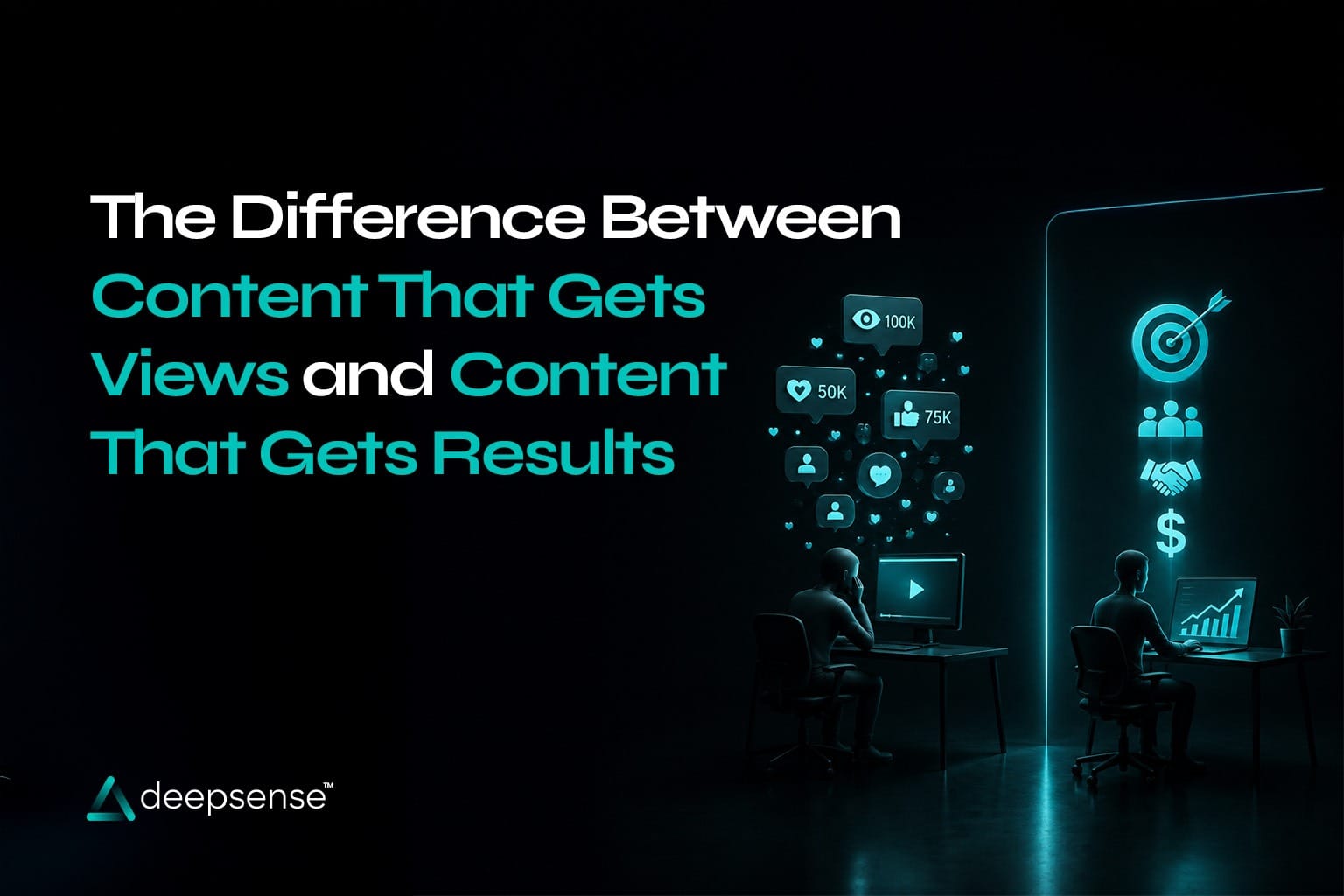
Content That Gets Views
Creates:
- curiosity,
- entertainment,
- temporary attention.
Content That Gets Results
Creates:
- trust,
- consideration,
- inquiries,
- conversions,
- customer action.
Both have value.
But only one consistently contributes to growth.
Understanding Vanity Metrics vs Business Results
One of the most important concepts in modern marketing is understanding vanity metrics vs business results.
Vanity Metrics
These look impressive but don’t necessarily impact revenue.
Examples:
- likes,
- followers,
- impressions,
- reach,
- video views.
Business Metrics
These directly support growth.
Examples:
- leads,
- conversions,
- revenue,
- customer acquisition,
- retention,
- inquiries.
The problem isn’t vanity metrics themselves.
The problem is treating them as the final goal.
Why High Engagement Doesn’t Always Mean Success
A common misconception is:
“High engagement means the content worked.”
Not necessarily.
A funny meme may generate:
- shares,
- comments,
- reactions.
But if it doesn’t attract the right audience or influence buying behavior, its business value may be limited.
This highlights the difference between:
engagement vs conversions
Engagement indicates interest.
Conversions indicate action.
What Content That Converts Actually Looks Like
Content that converts is designed to move audiences toward a business objective.
It often focuses on:
- solving problems,
- building trust,
- addressing objections,
- educating buyers,
- demonstrating expertise.
Instead of simply attracting attention, it creates momentum.
Why Educational Content Often Produces Better Results
Educational content tends to perform well because it aligns with customer needs.
Examples:
- how-to guides,
- industry insights,
- case studies,
- tutorials,
- frameworks,
- expert advice.
This type of content positions a brand as a trusted authority.
Trust increases the likelihood of future action.
The Customer Journey Matters
Not all content should sell immediately.
Different content serves different purposes.
Awareness Content
Goal:
Get discovered.
Examples:
- viral posts,
- trend content,
- entertaining Reels.
Consideration Content
Goal:
Build trust.
Examples:
- educational content,
- industry expertise,
- customer stories.
Conversion Content
Goal:
Generate action.
Examples:
- case studies,
- testimonials,
- product demonstrations,
- success stories.
A strong content marketing strategy uses all three stages.
Why Businesses Focus Too Much on Reach
Reach feels exciting because it’s visible.
Revenue growth often happens more slowly.
As a result, many businesses optimize content for:
- virality,
- engagement,
- trends.
Instead of optimizing for:
- trust,
- qualification,
- lead generation,
- customer education.
This creates a disconnect between content performance and business performance.
The Role of Content ROI
Every piece of content should contribute to a broader business goal.
This is where content ROI becomes important.
Content ROI asks:
- Did this content generate leads?
- Did it improve trust?
- Did it influence purchasing decisions?
- Did it contribute to revenue?
These questions matter more than view counts alone.
Examples of Content That Gets Views
Let’s look at typical examples.
Trend-Based Content
Often generates:
- reach,
- impressions,
- temporary visibility.
Entertaining Content
Often generates:
- shares,
- reactions,
- awareness.
Meme Content
Often generates:
- engagement,
- audience interaction.
These formats can be useful but don’t always create measurable business outcomes.
Examples of Content That Gets Results
Now let’s look at higher-converting formats.
Case Studies
Demonstrate real outcomes.
Customer Success Stories
Build trust and credibility.
Problem-Solving Guides
Position the brand as helpful and knowledgeable.
Industry Expertise Content
Strengthens authority.
Product Education
Reduces uncertainty and buying resistance.
These formats often produce stronger content marketing results.
The Hidden Power of Lead Generation Content
One of the most effective forms of content is lead generation content.
Its purpose is not just visibility.
Its purpose is to create opportunities for future sales.
Examples:
- downloadable guides,
- webinars,
- free tools,
- assessments,
- checklists,
- templates.
These formats encourage users to take action rather than simply consume.
Measuring Content Performance Correctly
Many businesses track the wrong metrics.
A more balanced approach includes:
Awareness Metrics
- reach,
- impressions,
- views.
Engagement Metrics
- comments,
- shares,
- saves.
Business Metrics
- leads,
- inquiries,
- conversions,
- revenue.
Strong content performance metrics include all three categories.
Why Trust-Driven Content Wins Long-Term
Content that generates results often shares one characteristic:
It builds trust.
Customers rarely purchase immediately after seeing a single post.
Instead, they gradually develop confidence through repeated exposure to valuable content.
Trust accumulates.
And trust drives action.
The Future of Content Marketing in 2026
As AI tools make content creation easier, the internet is becoming more crowded.
This means:
- getting views is becoming easier,
- generating trust is becoming harder.
The brands that succeed will focus less on chasing attention and more on creating meaningful value.
Because attention can be rented.
Trust must be earned.
A Better Question to Ask
Instead of asking:
“How many views did this get?”
Ask:
- Did it generate qualified leads?
- Did it strengthen trust?
- Did it influence customer decisions?
- Did it move people closer to purchase?
Those questions reveal true performance.
Final Takeaway
Views are important.
But views alone don’t build businesses.
The real goal of content marketing is not simply to attract attention.
It’s to influence action.
The best content doesn’t just generate:
impressions
likes
reach
It generates:
trust
leads
conversions
revenue
That’s the difference between content that gets views and content that gets results.
And in 2026, the brands that grow fastest won’t be the ones chasing vanity metrics.
They’ll be the ones creating content with a clear business purpose behind every post.
FAQs
1. What are content marketing results?
Content marketing results are measurable business outcomes such as leads, conversions, revenue, customer acquisition, and improved brand trust.
2. What is the difference between engagement and conversions?
Engagement measures audience interaction through likes, comments, shares, and saves, while conversions measure actions such as inquiries, sign-ups, purchases, or lead generation.
3. Why do some posts get views but not sales?
Many posts focus on entertainment or visibility rather than solving customer problems, building trust, or encouraging action.
4. What type of content converts best?
Case studies, customer testimonials, educational guides, product demonstrations, and problem-solving content often produce stronger conversion rates.
5. How can businesses measure content ROI?
Businesses can track content ROI by analyzing leads generated, conversion rates, customer acquisition, revenue impact, and engagement quality.
6. What are the most important content performance metrics?
The most important metrics include reach, engagement, lead generation, conversion rates, customer acquisition, and overall contribution to business growth.