
Most businesses are busy with marketing.
Posting daily.
Running ads.
Creating content.
Trying new strategies.
On the surface, it looks like progress.
But here’s the uncomfortable truth:
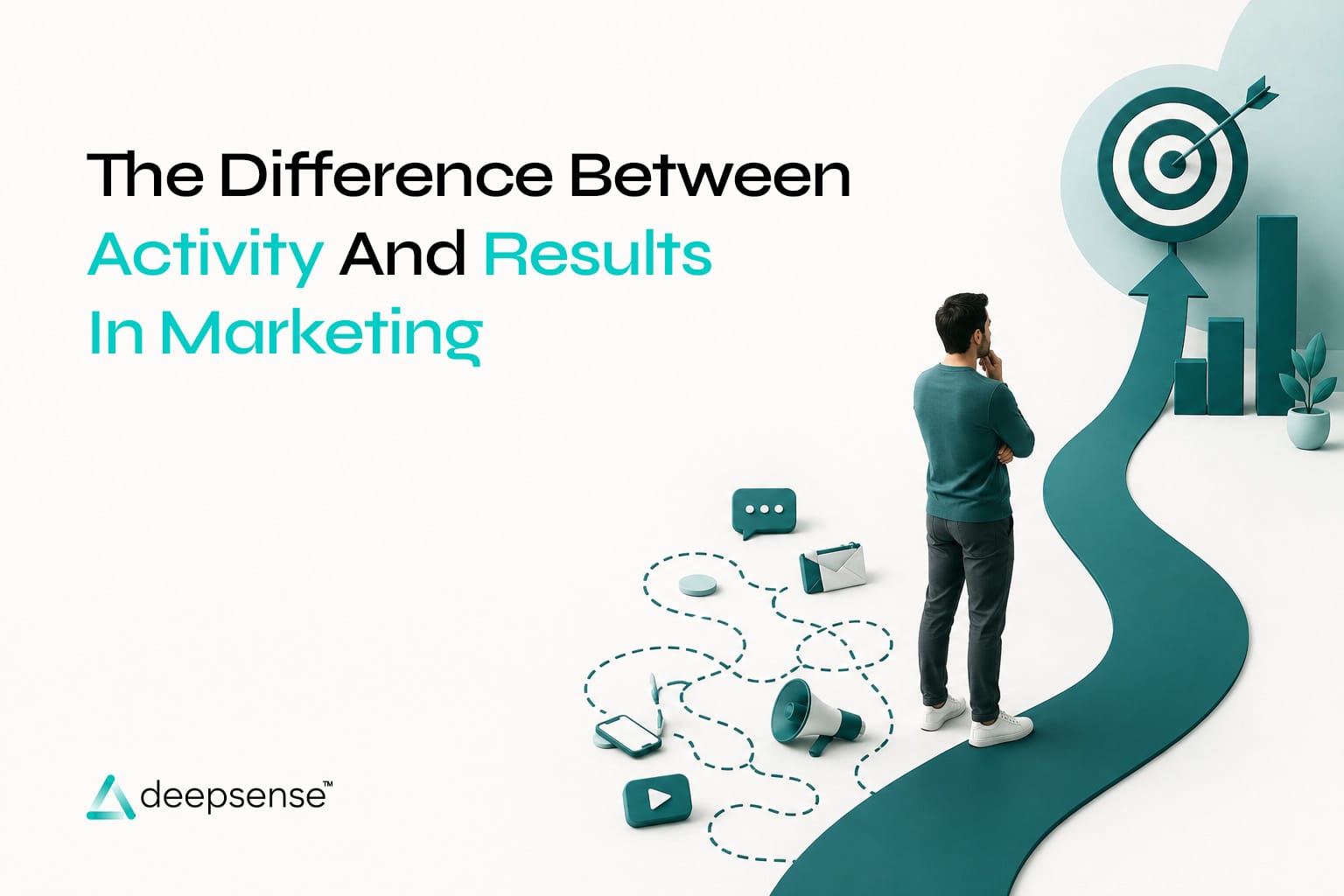
Activity is not the same as results
And confusing the two is one of the biggest reasons why marketing efforts fail.
The Core Problem: Busy ≠ Productive
In marketing, it’s easy to stay busy.
- Posting content
- Designing creatives
- Launching campaigns
But being busy doesn’t guarantee:
Leads
Sales
Revenue
This is the gap between marketing activity vs results.
What Is Marketing Activity?
Marketing activity includes everything you do:
- Posting on social media
- Running ads
- Writing blogs
- Sending emails
These are necessary.
But they don’t guarantee outcomes.
They are inputs not outputs.
What Are Marketing Results?
Results are what you get:
- Leads generated
- Sales closed
- Revenue growth
- Customer acquisition
These define success.
They are the true measure of marketing ROI vs activity.
Why Businesses Confuse Activity with Results
1. Activity Feels Like Progress
When you’re doing more:
It feels like you’re moving forward
But without measurable outcomes:
You’re just moving, not growing
2. Vanity Metrics Create Illusion
Likes, views, and followers give a sense of success.
But they don’t always translate into:
Sales
This ties back to measuring marketing performance correctly.
3. Lack of Clear Goals
Without defined KPIs:
Activity becomes the goal
Instead of results.
4. No Tracking System
If you don’t measure:
- Conversions
- Revenue
- ROI
You can’t tell what’s working.
Signs You’re Stuck in Activity Mode
- Posting consistently but no sales growth
- Running ads without clear ROI
- High engagement but low conversions
- Trying multiple strategies with no results
- No clear tracking of performance
These are classic busy vs productive marketing problems.
Why Marketing Activity Doesn’t Lead to Results
1. No Strategy Behind Execution
Random actions without direction lead to:
Random results
A strong effective marketing strategy is essential.
2. Lack of Customer Focus
If your marketing doesn’t address:
- Customer problems
- Customer needs
It won’t convert.
3. No Funnel System
Without a funnel:
Traffic doesn’t turn into customers
4. Inconsistent Messaging
If your brand message is unclear:
Users don’t connect
Conversions drop
5. No Optimization
Doing the same thing repeatedly without improvement:
Leads to stagnation
Marketing ROI vs Activity: The Real Difference
| Activity | Results |
|---|---|
| Posting daily | Generating leads |
| Running ads | Converting customers |
| Creating content | Driving revenue |
| Getting likes | Getting sales |
| Increasing reach | Increasing ROI |
Activity is effort
Results are outcomes
How to Shift from Activity to Results
1. Define Clear Goals
Before any action, ask:
What result do I want?
Examples:
- Increase leads
- Improve conversion rate
- Grow revenue
2. Track What Matters
Focus on:
- Conversion rate
- Cost per acquisition
- ROI
This is key to measuring marketing performance.
3. Build a Conversion System
Every activity should lead to:
A funnel
Example:
Content → Landing Page → Lead → Sale
4. Focus on High-Impact Activities
Not all tasks are equal.
Prioritize:
- Sales-driven campaigns
- Conversion optimization
- Customer acquisition
This improves digital marketing productivity.
5. Optimize Continuously
Analyze:
- What’s working
- What’s not
Then improve.
The 80/20 Rule in Marketing
80% of results often come from:
20% of efforts
Identify:
- High-performing content
- Best channels
- Top campaigns
Double down on them.
Real Insight: Why Some Brands Grow Faster
Successful brands don’t:
Do more
Post more
Spend more randomly
They:
Focus on results
Measure performance
Optimize constantly
That’s the foundation of results driven marketing.
Final Takeaway
Marketing is not about doing more.
It’s about achieving more.
Activity keeps you busy
Results grow your business
If you want real growth:
Focus on outcomes
Track performance
Build systems that convert
Because:
Effort doesn’t equal success
Results do
FAQs
1. What is the difference between marketing activity and results?
Marketing activity refers to tasks performed, while results refer to measurable outcomes like leads, sales, and revenue.
2. Why do marketing efforts fail despite high activity?
Because activity without strategy, tracking, and optimization doesn’t lead to meaningful results.
3. How can businesses measure marketing performance effectively?
By tracking metrics like conversion rate, ROI, customer acquisition cost, and revenue growth.
4. What is results-driven marketing?
It’s a strategy focused on achieving measurable business outcomes rather than just completing tasks.
5. How can I improve digital marketing productivity?
Focus on high-impact activities, track performance, optimize campaigns, and align efforts with business goals.