
Your posts are getting likes.
Your reels are getting views.
Your followers are growing.
It feels like success.
But your revenue?
Still stuck.
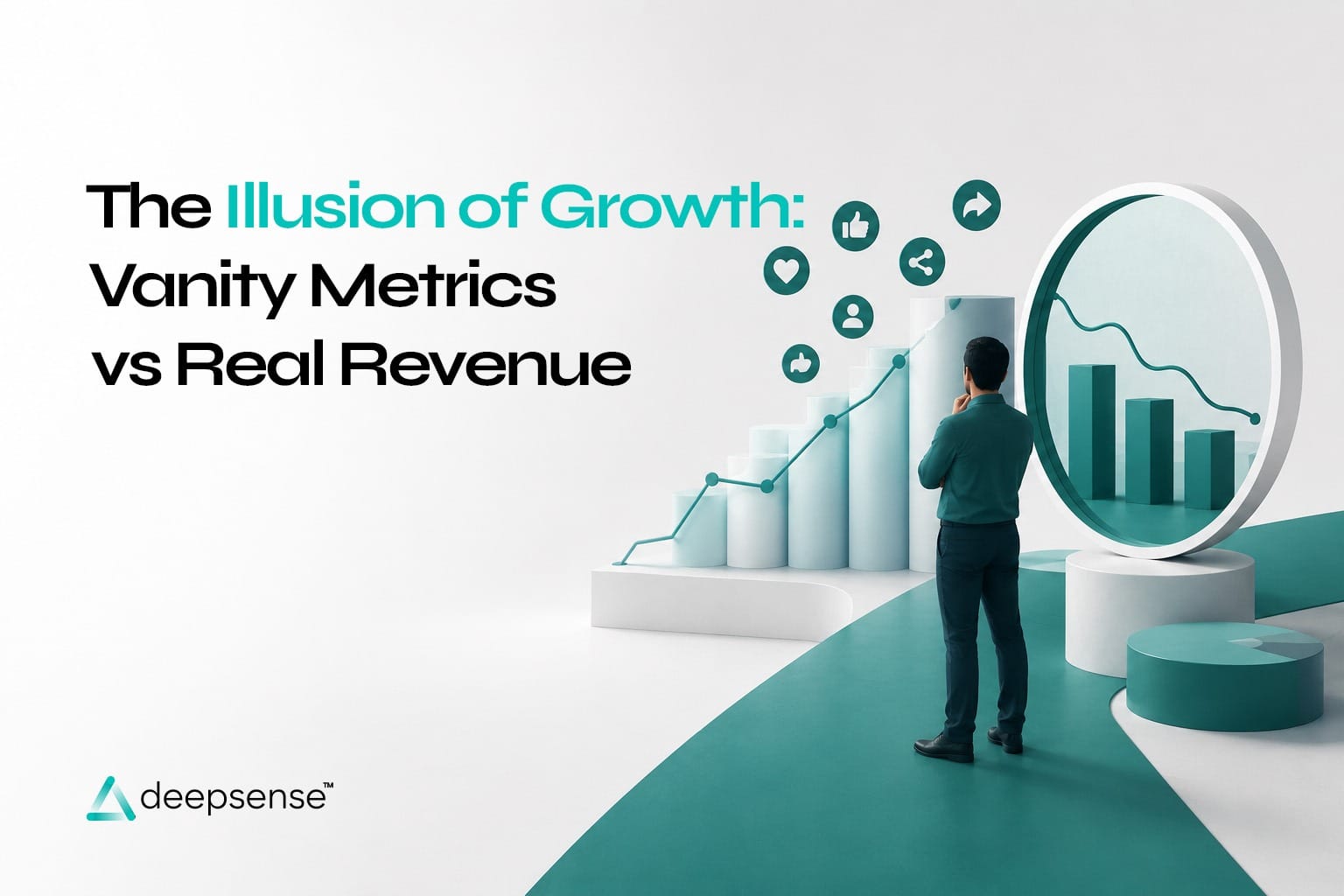
This is the dangerous gap between vanity metrics vs real revenue.
And most businesses don’t realize it until it’s too late.
What Are Vanity Metrics?
Vanity metrics are numbers that:
Look good
Feel good
But don’t drive business growth
Common examples of vanity metrics in marketing:
- Likes
- Followers
- Views
- Impressions
- Reach
They create the illusion of progress…
Without actual results.
What Are Real Growth Metrics?
Real metrics are tied directly to:
Revenue
Profit
Business growth
These are your real business growth metrics:
- Conversion rate
- Cost per lead (CPL)
- Customer acquisition cost (CAC)
- Return on ad spend (ROAS)
- Customer lifetime value (LTV)
These tell you:
If your business is actually growing
Social Media Metrics vs Sales: The Disconnect
One viral reel ≠ revenue.
You can have:
- 1M views
- 10K likes
- 5K followers
And still:
Zero sales
This is the core problem of social media metrics vs sales.
Because:
Attention ≠ Intent
Engagement ≠ Conversion
Why Engagement Doesn’t Equal Sales
Let’s break down why engagement doesn’t equal sales:
1. Wrong Audience
Your content may attract:
Viewers, not buyers
Entertainment brings attention.
Value brings customers.
2. No Funnel
If you don’t have:
- Landing pages
- Lead capture
- Follow-up system
Your traffic goes nowhere.
3. Weak Offer
Even with attention:
People won’t buy if the offer isn’t strong
4. No Trust Building
Likes don’t build trust.
Consistency + value does.
5. No Conversion Strategy
If you’re not guiding users:
They won’t convert
This is where conversion vs engagement becomes critical.
The Hidden Cost of Chasing Vanity Metrics
Focusing only on vanity metrics leads to:
False Confidence
You think things are working…
But they aren’t.
Wasted Budget
Spending on ads that:
Drive clicks, not conversions
No Real Growth
Your business stays stagnant.
Poor Decision Making
You optimize for:
Likes instead of revenue
Marketing Metrics That Actually Matter
If you want growth, track marketing metrics that matter:
Conversion Rate
How many visitors turn into customers?
Cost Per Acquisition (CPA)
How much you spend to get one customer.
Customer Lifetime Value (LTV)
How much revenue a customer generates over time.
Return on Investment (ROI)
Your actual profit from marketing efforts.
This is the foundation of ROI in digital marketing.
Sales Funnel Performance
Where are users dropping off?
That’s where you fix.
How to Shift from Vanity to Revenue
1. Align Content with Business Goals
Don’t just post for engagement.
Post for conversion
2. Build a Funnel
Every piece of content should lead to:
- A landing page
- A lead magnet
- A product
3. Focus on Intent-Based Content
Create content that attracts:
Buyers, not just viewers
4. Track the Right Metrics
Stop tracking:
Likes
Start tracking:
Conversions
Revenue
5. Optimize for Sales, Not Reach
More reach doesn’t always mean more revenue.
Better conversion does.
Real Example
Post A:
- 50K views
- 5K likes
- 0 sales
Post B:
- 5K views
- 200 likes
- 50 sales
Which one wins?
Post B.
Because:
Revenue > Attention
The Reality Most Businesses Ignore
Growth is not:
- More followers
- More likes
- More views
Growth is:
More customers
More revenue
More profit
Everything else is just noise.
Final Takeaway
Vanity metrics make you feel successful.
Real metrics make you successful.
If you want to grow:
Stop chasing likes
Start tracking revenue
Build systems that convert
Because:
Attention without conversion is wasted
Engagement without sales is illusion
Metrics without meaning are dangerous
FAQs
1. What are vanity metrics in marketing?
Vanity metrics are surface-level numbers like likes, views, and followers that don’t directly impact revenue.
2. What is the difference between vanity metrics and real revenue?
Vanity metrics measure attention, while real revenue metrics measure actual business growth and profitability.
3. Why doesn’t engagement lead to sales?
Because engagement often comes from non-buyers, lacks funnel structure, and doesn’t guide users toward conversion.
4. What marketing metrics should businesses focus on?
Conversion rate, customer acquisition cost, lifetime value, and ROI are key metrics that matter.
5. How can I improve ROI in digital marketing?
Focus on targeting the right audience, optimizing your funnel, and tracking conversion-focused metrics.