

Every second, thousands of posts compete for attention.
But only a few make people pause.
Why?
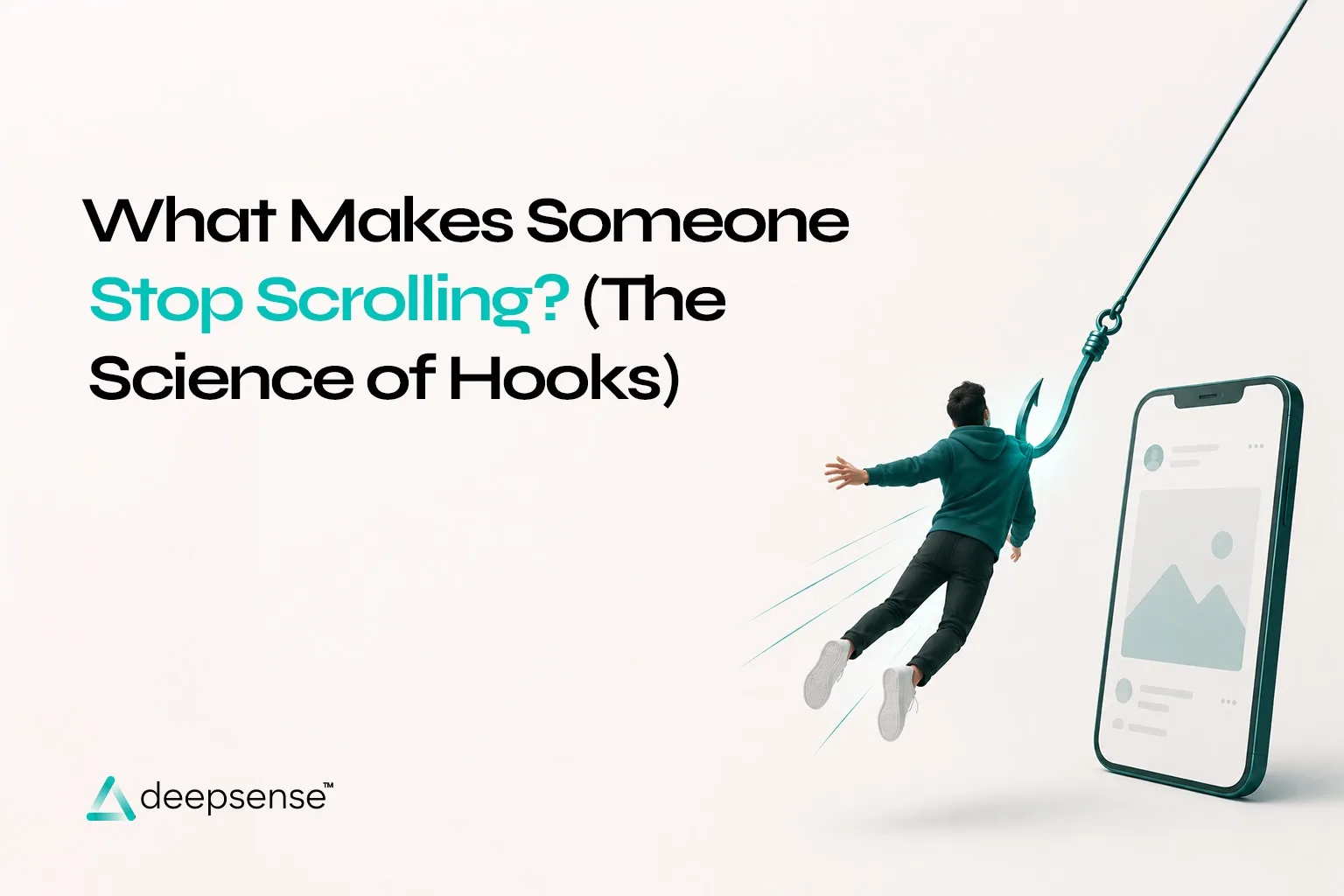
Because they understand what makes people stop scrolling
In today’s content world, your success doesn’t depend on how good your content is…
It depends on how fast you can capture attention
This is where the science of hooks comes in.
The Truth About Attention Today
Users don’t choose content anymore.
They react to it instantly
Within seconds, they decide:
- Is this relevant?
- Is this interesting?
- Is this worth my time?
If not:
Scroll.
Understanding this behavior is key to mastering psychology of social media engagement.
What Actually Makes People Stop Scrolling
1. Pattern Interrupt (Break the Scroll Habit)
Scrolling is automatic.
To stop it, you need to break the pattern.
Examples:
- “Stop doing this if you want sales”
- “This is why your content isn’t working”
These create disruption.
That’s the foundation of attention grabbing hooks marketing.
2. Curiosity Gap
Humans hate incomplete information.
When you create curiosity:
The brain wants closure
Examples:
- “No one talks about this…”
- “This one mistake is killing your growth”
Curiosity pulls attention.
3. Relatability (That’s Me Moment)
People stop when they feel:
“This is exactly my problem”
Examples:
- “Getting traffic but no sales?”
- “Posting daily but no engagement?”
This is core to social media hook strategy.
4. Clear Value Promise
Users want to know instantly:
“What will I gain from this?”
Examples:
- “3 ways to increase conversions instantly”
- “How to fix low engagement in 5 minutes”
Clarity beats creativity.
5. Emotional Trigger
Emotion drives attention.
Content that triggers:
- Fear
- Curiosity
- Excitement
- Humor
Performs better.
This is key in how to create scroll stopping content.
6. Speed of Communication
If your message is not clear in seconds:
You lose
Your hook must:
- Be simple
- Be direct
- Be instantly understandable
The 3-Second Hook Formula
To master how to hook audience in 3 seconds, follow this structure:
Hook = Problem + Curiosity + Outcome
Example:
“Struggling with low engagement? This fixes it instantly.”
Breakdown:
- Problem → Low engagement
- Curiosity → “This fixes it”
- Outcome → Better results
Types of High-Performing Hooks
1. Problem Hooks
“Why your ads aren’t converting”
2. Mistake Hooks
“You’re doing this wrong”
3. Contrarian Hooks
“Consistency is overrated”
4. Curiosity Hooks
“This changes everything”
5. List Hooks
“5 mistakes killing your growth”
6. Outcome Hooks
“How we increased sales by 3x”
These are proven content hooks examples.
Visual Hooks: The Overlooked Factor
Hooks are not just text.
They’re also visual.
To stop scrolling, use:
- Movement in first second
- Bold text overlays
- Facial expressions
- Contrast colors
Visuals are critical in stop scrolling content ideas.
Common Mistakes That Kill Hooks
Starting Slow
“Hi everyone…”
Already lost.
Being Too Vague
“Something important…”
No clarity = no attention.
No Relevance
Talking about something users don’t care about.
Overcomplicated Messaging
Confusing hooks don’t work.
Simple wins.
How to Create Scroll-Stopping Content Consistently
1. Know Your Audience Deeply
Understand:
- Pain points
- Desires
- Frustrations
Hooks come from insight.
2. Study What Works
Analyze:
- Viral posts
- Competitor content
- High-performing reels
Adapt, don’t copy.
3. Test Multiple Hooks
Same content, different hooks.
See what performs best
4. Prioritize the First Frame
Your first frame = your first impression.
Make it count.
5. Combine Text + Visual Hooks
Strong text + strong visuals = maximum impact.
Real Insight: Hooks Decide Everything
Your content may be:
- Valuable
- Insightful
- Well-designed
But if the hook fails:
No one sees it
Because:
Content is judged before it’s consumed
Final Takeaway
In the scroll economy:
Attention is the hardest thing to earn
And hooks are the gateway.
If you want better engagement:
Focus on the first 3 seconds
Create curiosity
Be clear and relevant
Because:
If you don’t stop the scroll
Nothing else matters
FAQs
1. What makes people stop scrolling on social media?
Pattern interrupts, curiosity, relatability, and clear value-driven hooks make users pause.
2. How do you create scroll-stopping content?
Use strong hooks, emotional triggers, clear messaging, and engaging visuals in the first few seconds.
3. What is a social media hook strategy?
It’s a method of crafting opening lines or visuals that capture attention instantly and encourage users to engage.
4. How important are the first 3 seconds in content?
They are critical, as users decide whether to continue watching or scroll within that time.
5. What are examples of effective content hooks?
Problem-based hooks, curiosity hooks, contrarian statements, and list-based hooks perform best