
We don’t browse anymore.
We scroll.
Fast.
Endlessly.
Emotionlessly.
In today’s digital world, attention is not given it’s earned in seconds.
Welcome to the Scroll Economy, where:
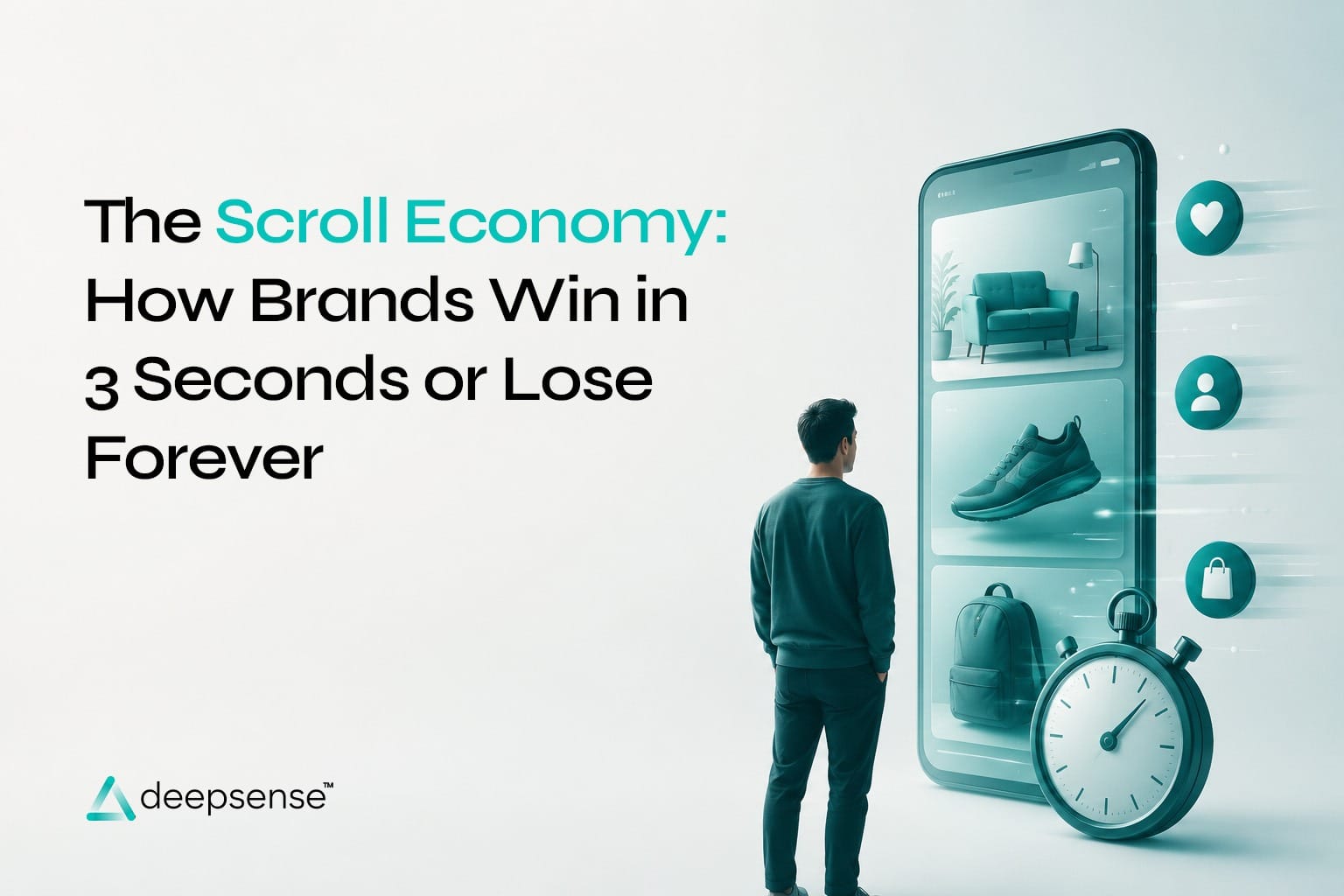
You have 3 seconds to win
Or you disappear forever
What Is the Scroll Economy?
The Scroll Economy is a content environment where:
- Users consume content rapidly
- Attention spans are shorter than ever
- Decisions are made instantly
Platforms like Instagram, YouTube Shorts, and TikTok have trained users to:
Judge content in seconds
Skip without thinking
This has completely changed digital marketing strategy.
The 3-Second Rule: Your Only Chance
When someone sees your content, they subconsciously decide:
- Is this relevant?
- Is this interesting?
- Is this worth my time?
All within:
1–3 seconds
If the answer is no:
Scroll. Gone. Forgotten.
This is why most content fails not because it’s bad, but because it’s ignored.
Why Most Brands Lose in the Scroll Economy
1. Weak Hooks
Starting content with:
- “Hi guys…”
- “Welcome to our page…”
Is a guaranteed scroll.
You’ve already lost.
2. Slow Build-Ups
If your message takes time to get interesting:
You’re too late
In the scroll economy:
- Speed = survival
3. Overly Promotional Content
Users don’t open Instagram to see ads.
They want:
- Entertainment
- Relatability
- Value
Hard selling kills attention.
4. No Emotional Trigger
Content without:
- Curiosity
- Humor
- Shock
- Relatability
Fails instantly.
Emotion = engagement.
5. Lack of Visual Impact
Boring visuals = instant scroll.
You need:
- Movement
- Contrast
- Strong framing
To stop the thumb.
How Brands Win in the First 3 Seconds
1. Start With a Pattern Interrupt
Break expectations instantly.
Examples:
- “This is why your ads are failing…”
- “Stop doing this if you want sales…”
- “No one talks about this…”
This creates curiosity.
2. Use Relatable Pain Points
Speak directly to the audience’s problem:
“Getting traffic but no sales?”
“Spending on ads but no ROI?”
When people feel understood, they stop scrolling.
3. Show the Outcome First
Don’t build up.
Start with:
- Result
- Transformation
- Bold statement
Example:
“We increased conversions by 3x here’s how.”
4. Make It Visually Dynamic
Use:
- Quick cuts
- Text overlays
- Movement
Static = invisible.
5. Add Captions for Silent Viewers
Most users watch without sound.
Your message should:
Work visually
Be readable instantly
Content Formats That Win in the Scroll Economy
1. Problem-Solution Reels
Hook → Problem → Solution → CTA
2. “You’re Doing This Wrong” Content
Calls out mistakes directly.
3. Before vs After
Transformation-driven content.
4. Behind-the-Scenes
Raw, authentic, relatable.
5. Fast-Paced Educational Content
Quick value in under 30 seconds.
The Psychology Behind Scroll Behavior
Users are constantly asking:
“What’s in it for me?”
If your content doesn’t answer that immediately:
You lose attention
Winning content:
- Feels relevant
- Feels valuable
- Feels personal
The New Content Strategy Framework
To succeed in the scroll economy, your content must follow:
Hook (0–3 sec)
Grab attention instantly
Retain (3–10 sec)
Keep them watching
Deliver (10–30 sec)
Provide value
Convert (CTA)
Tell them what to do next
This is the foundation of modern social media marketing strategy.
The Cost of Losing Attention
If your content doesn’t hook:
- Low reach
- Low engagement
- Poor brand recall
- Wasted effort
Over time, this leads to:
Invisible brand presence
The Opportunity: Attention Is the New Currency
In the scroll economy:
Attention = growth
Attention = brand awareness
Attention = revenue
Brands that master attention:
Grow faster
Spend less on ads
Build stronger recall
Final Takeaway
You don’t have minutes.
You don’t even have 10 seconds.
You have 3 seconds
To:
- Stop the scroll
- Capture attention
- Make an impression
Because in today’s world:
If they don’t notice you instantly
They won’t remember you at all
FAQs
1. What is the scroll economy?
The scroll economy refers to how users consume content rapidly on social media, making instant decisions about what to watch or skip.
2. Why are the first 3 seconds important in content?
Because users decide whether to continue watching or scroll within the first few seconds.
3. How can brands stop users from scrolling?
By using strong hooks, relatable content, and visually engaging formats.
4. What type of content works best in the scroll economy?
Short-form videos, problem-solution content, relatable reels, and fast-paced educational content.
5. How does the scroll economy impact marketing strategy?
It forces brands to focus on attention-grabbing content, faster storytelling, and high engagement formats