
Every brand dreams of going viral.
A reel explodes.
A campaign trends.
Engagement skyrockets overnight.
For a moment, it feels like success has arrived.
But here’s the reality most businesses discover later:
Virality gets attention.
Consistency builds brands.
In 2026, many businesses are trapped chasing:
- viral trends,
- short-term spikes,
- algorithm moments,
- temporary engagement.
Meanwhile, the strongest brands in the world are quietly winning through:
repetition,
familiarity,
trust,
and strategic consistency.
That’s why brand consistency has become more valuable than ever.
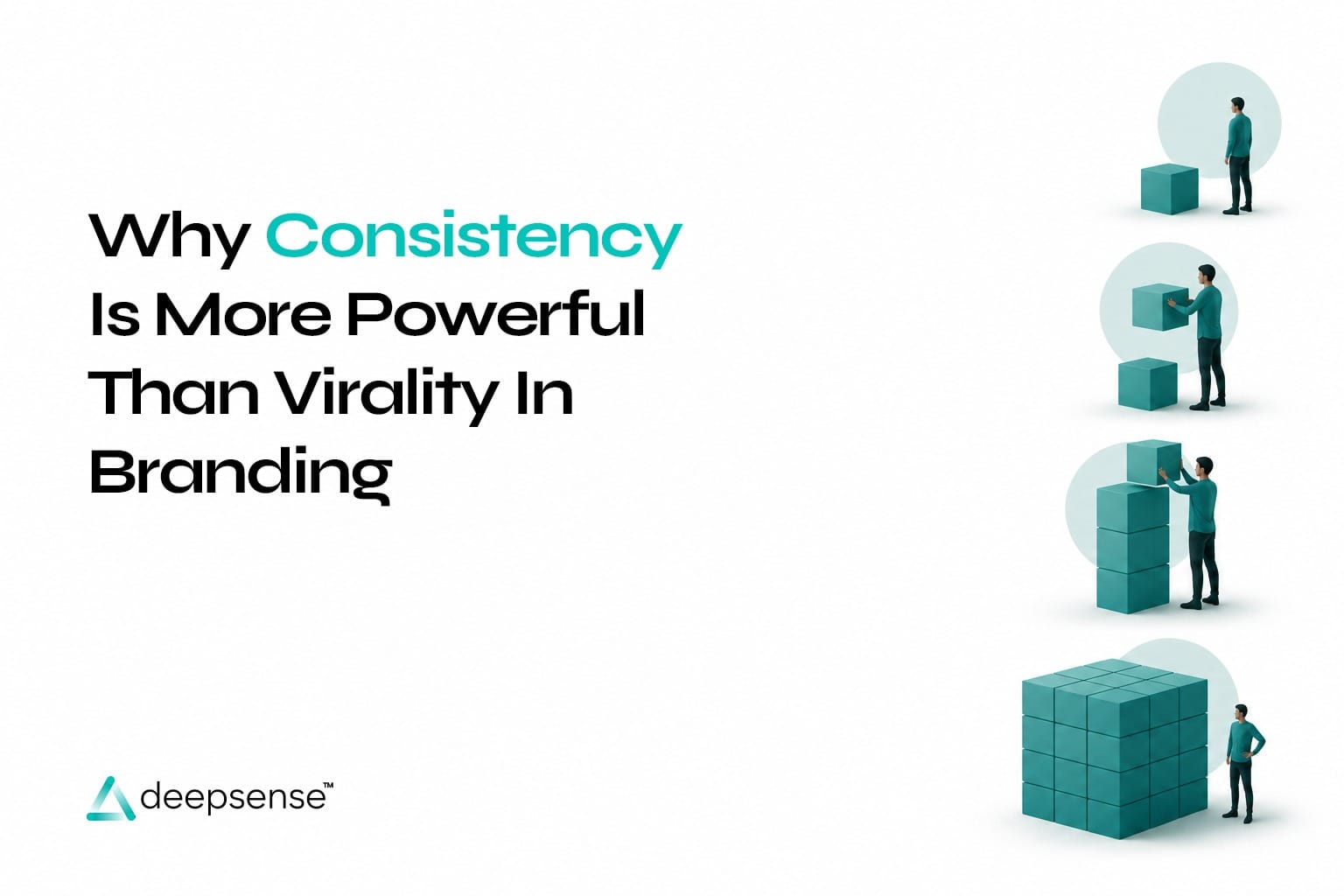
Because sustainable growth is rarely built from one viral moment.
It’s built from being remembered repeatedly.
The Problem With Viral Marketing Obsession
Social media has changed how businesses think.
Today, many brands measure success through:
- views,
- reach,
- shares,
- trending moments.
This creates a dangerous illusion:
high visibility = strong branding.
But that’s not always true.
A post can generate:
- millions of views,
- huge engagement,
- massive temporary reach
and still create almost zero long-term customer memory.
That’s the biggest difference between:
viral marketing vs branding
What Virality Actually Does
Virality creates:
- sudden exposure,
- rapid attention,
- conversation spikes,
- temporary audience growth.
This can absolutely help a brand.
But virality alone does not guarantee:
- trust,
- loyalty,
- retention,
- or brand recall.
Many viral brands disappear quickly because:
people remember the content…
not the company behind it.
What Consistency Actually Builds
Consistency creates:
- familiarity,
- recognition,
- trust,
- emotional reliability,
- long-term perception.
It helps customers repeatedly associate your brand with:
- a feeling,
- a category,
- a promise,
- an experience.
That repetition strengthens memory.
And memory drives growth.
This is the core of a strong brand recall strategy.
Why Human Psychology Favors Consistency
People naturally trust what feels familiar.
This is called the “mere exposure effect.”
The more consistently customers see:
- your messaging,
- your tone,
- your visuals,
- your positioning,
the more mentally comfortable your brand becomes.
That’s why consistency in branding works so powerfully psychologically.
Viral Attention Is Temporary. Memory Compounds.
Virality often creates:
sharp spikes.
Consistency creates:
slow compounding growth.
One viral campaign may bring:
- attention for days.
But years of consistent branding create:
- recognition,
- loyalty,
- emotional trust,
- direct brand recall.
And those effects become stronger over time.
Why Most Businesses Struggle With Consistency
Consistency sounds simple
but it’s difficult emotionally.
Because consistency often feels:
- slower,
- less exciting,
- less dramatic than virality.
Brands get impatient.
So they:
- change messaging constantly,
- chase trends,
- switch content styles,
- copy competitors,
- reinvent themselves every month.
This weakens memory formation.
The Biggest Branding Mistake: Constant Reinvention
Many businesses believe:
“If we aren’t going viral, something is wrong.”
So they keep changing:
- brand voice,
- visuals,
- content direction,
- positioning.
But strong branding usually comes from:
repetition, not reinvention.
Customers remember brands that consistently reinforce the same perception over time.
How Strong Brands Actually Grow
The most recognizable brands in the world are rarely built through randomness.
They grow through:
- repeated messaging,
- consistent visual identity,
- emotional familiarity,
- stable positioning,
- predictable brand experience.
That’s the foundation of a strong long term brand strategy.
What Brand Consistency Looks Like
Consistency does NOT mean:
being repetitive or boring.
It means:
maintaining recognizable identity across:
- content,
- campaigns,
- ads,
- website,
- customer experience,
- communication style.
Strong consistency creates:
instant recognition.
The Role of Brand Recall
Customers buy faster from brands they recognize.
That’s why repeated exposure matters so much.
If people consistently encounter your brand in a familiar way,
they begin remembering it naturally during buying decisions.
This strengthens:
- trust,
- credibility,
- conversion probability.
That’s the power of a strategic brand recall strategy.
Virality Without Consistency Creates Fragile Growth
Some brands experience:
- sudden viral success,
- huge follower spikes,
- temporary popularity.
But if the brand lacks:
- identity,
- positioning,
- consistency,
the audience quickly loses interest.
This creates unstable growth cycles.
The business becomes dependent on:
“the next viral hit.”
That’s exhausting and unsustainable.
Sustainable Brand Growth Comes From Repetition
The strongest brands often grow quietly at first.
They:
- show up consistently,
- reinforce identity repeatedly,
- build trust slowly,
- improve recognition steadily.
Over time, this creates:
stronger customer memory
lower acquisition resistance
higher loyalty
better organic growth
That’s real sustainable brand growth.
Why Consistency Improves Marketing Performance
Consistency improves almost every marketing metric:
- brand recall,
- CTR,
- trust,
- engagement quality,
- retention,
- conversion rates.
Because customers feel:
familiarity.
And familiarity reduces psychological friction.
Consistency Helps Brands Own Mental Space
The goal of branding is not just:
being visible.
The goal is:
being mentally associated with something specific.
Examples:
- reliability,
- innovation,
- affordability,
- luxury,
- simplicity,
- creativity.
Consistent reinforcement helps brands “own” these associations in customer memory.
Social Media Algorithms Reward Consistency Too
Interestingly, consistency also performs better algorithmically over time.
Platforms increasingly reward:
- stable audience engagement,
- recurring content behavior,
- audience familiarity,
- repeated interaction patterns.
This means consistency helps both:
- humans,
- and algorithms.
Branding vs Virality: The Core Difference
| Virality | Consistency |
|---|---|
| Temporary spikes | Long-term growth |
| Attention-driven | Memory-driven |
| Unpredictable | Sustainable |
| Trend-focused | Identity-focused |
| Emotionally exciting | Strategically reliable |
One creates moments.
The other creates brands.
Why Consistency Matters More in 2026
In the AI-content era,
the internet is flooded with:
- endless posts,
- trend clones,
- short-lived viral formats,
- attention overload.
Which means:
attention is becoming cheaper.
But memory is becoming more valuable.
That’s why why consistency matters in marketing is becoming one of the most important branding discussions today.
The Smartest Brands Use Virality Differently
This doesn’t mean:
“avoid virality.”
The smartest brands use viral moments as:
amplification tools.
Not identity replacements.
Virality should support:
- positioning,
- consistency,
- brand identity.
Not override them.
A Powerful Branding Question to Ask
Instead of asking:
“How do we go viral?”
Ask:
“What do we want people to consistently remember about us?”
That question builds stronger businesses long-term.
Final Takeaway
Virality creates visibility.
Consistency creates memory.
And memory creates brands.
That’s why the businesses growing strongest in 2026 are not necessarily:
- the trendiest,
- the loudest,
- or the most viral.
They are the ones that repeatedly show up with:
clear positioning
recognizable identity
emotional familiarity
strategic consistency
Because customers rarely trust brands they only notice once.
They trust brands they repeatedly recognize over time.
And in branding,
recognition compounds far longer than attention spikes ever do.
FAQs
1. Why is brand consistency important?
Brand consistency helps build recognition, trust, familiarity, and long-term customer memory across all marketing channels.
2. What is the difference between viral marketing and branding?
Viral marketing creates temporary attention, while branding focuses on long-term perception, trust, and customer recall.
3. How does consistency improve brand recall?
Repeated exposure to the same messaging, visuals, and positioning helps customers remember the brand more easily over time.
4. Can brands grow without going viral?
Yes. Many successful brands grow sustainably through consistent positioning, trust-building, and long-term audience relationships rather than viral spikes.
5. What is a sustainable long-term brand strategy?
A sustainable brand strategy focuses on consistency, emotional connection, audience trust, recognizable identity, and repeated value delivery over time.