
Imagine two businesses selling similar products.
One product is objectively better:
- better features,
- better quality,
- better specifications,
- perhaps even a better price.
Yet customers consistently choose the other brand.
It happens every day.
In fact, some of the world’s most successful brands are not necessarily winning because they have the best product.
They’re winning because they have something even more powerful:
Brand preference.
This raises an important marketing question:
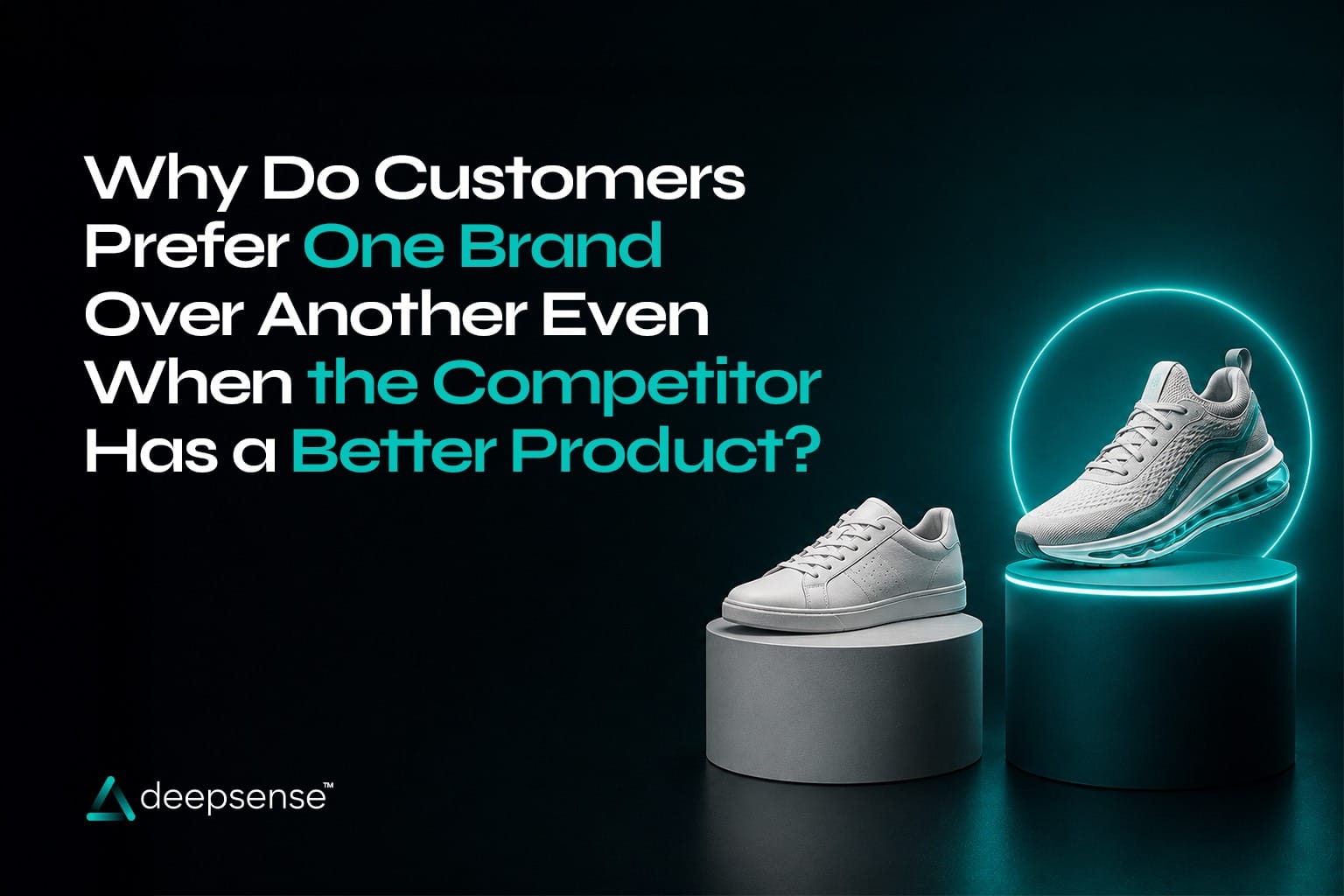
Why do customers choose one brand over another even when a competitor has a better product?
The answer lies in psychology, perception, trust, and human decision-making.
Because buying decisions are rarely as rational as businesses think.
The Myth: Customers Always Buy the Best Product
Many businesses assume:
“If our product is better, customers will naturally choose us.”
Unfortunately, that’s not how markets work.
Consumers don’t evaluate every purchase like engineers comparing specifications.
Most buying decisions happen quickly and are influenced by:
- emotions,
- trust,
- familiarity,
- perceptions,
- past experiences.
This is where consumer buying psychology becomes important.
Customers don’t simply buy products.
They buy confidence.
Product Quality Gets You Considered. Preference Gets You Chosen.
A great product is essential.
But it’s often not enough.
Think about your own buying behavior.
Have you ever chosen:
- a familiar restaurant,
- a trusted online store,
- a favorite clothing brand,
even though cheaper or technically better alternatives existed?
Most people have.
That’s because buying decisions are influenced by more than product performance.
They’re influenced by how customers feel about the brand.
Understanding Brand Preference
Brand preference occurs when customers consistently choose one brand over available alternatives.
This preference develops over time through:
- trust,
- positive experiences,
- emotional associations,
- perceived reliability,
- familiarity.
Once preference forms, competitors often struggle to break it even with superior products.
Why Customers Choose a Brand: The Real Reasons
Let’s explore the biggest drivers behind customer choice.
1. Trust Reduces Risk
One of the strongest influences in customer decision making is risk avoidance.
Every purchase carries uncertainty.
Customers wonder:
- Will this product work?
- Will I regret buying it?
- Can I trust this company?
A trusted brand reduces those concerns.
Even if another product appears better, customers often choose the option that feels safer.
This is why a strong brand trust strategy can outperform product advantages.
2. Familiarity Creates Comfort
Humans naturally prefer familiar options.
Psychologists call this the “mere exposure effect.”
The more often people encounter a brand:
- through content,
- advertising,
- recommendations,
- social media,
the more comfortable it feels.
And comfort strongly influences purchasing behavior.
This is why visibility and consistency matter so much.
3. Brand Perception Shapes Reality
One of the most important truths in marketing:
People respond to perceived value, not just actual value.
A product may objectively be excellent.
But if the brand appears:
- unreliable,
- unknown,
- inconsistent,
customers may hesitate.
Meanwhile, a brand with strong brand perception can create confidence before customers even try the product.
Perception influences choice more than many businesses realize.
4. Emotional Connection Beats Logical Comparison
Most purchases are emotional first and rational second.
Customers often choose brands that make them feel:
- understood,
- confident,
- successful,
- safe,
- aspirational.
This is why emotional branding is so powerful.
People rarely build emotional relationships with product specifications.
They build emotional relationships with brands.
5. Customers Buy Stories, Not Just Products
Strong brands tell compelling stories.
These stories help customers connect with:
- the mission,
- the values,
- the purpose,
- the identity of the brand.
A better product without a meaningful story often struggles against a slightly weaker product backed by a stronger narrative.
Storytelling influences customer purchase behavior far more than most companies expect.
6. Social Proof Influences Decisions
People trust people.
Before buying, customers often look for:
- reviews,
- testimonials,
- ratings,
- recommendations,
- user experiences.
When a brand has strong social proof, it creates confidence.
Customers think:
“If so many people trust this brand, it must be a good choice.”
This significantly impacts why customers choose a brand.
7. Consistency Creates Confidence
Imagine a brand that changes:
- messaging every month,
- visual identity frequently,
- tone across platforms.
It creates uncertainty.
Now compare that to a brand that consistently communicates:
- the same values,
- the same promise,
- the same experience.
Consistency strengthens trust.
And trust strengthens preference.
The Hidden Power of Brand Memory
Customers often choose brands they remember most easily.
This doesn’t mean they consciously compare every option.
Instead, the brain uses shortcuts.
When a buying need arises, familiar brands come to mind first.
That’s why brand recall and brand preference are closely connected.
If customers remember you and trust you, you’re already ahead in the decision-making process.
Why Better Products Sometimes Lose
Let’s look at a common scenario.
Brand A
- Better features
- Better quality
- Lower awareness
- Weak positioning
Brand B
- Slightly weaker product
- Strong reputation
- Better trust
- Clear positioning
Many customers will choose Brand B.
Not because it’s objectively superior.
But because it feels like the safer and smarter choice.
This demonstrates how brand preference factors can outweigh product advantages.
Customer Decision Making Is Emotional and Rational
Most buying decisions involve two systems:
Emotional System
- Fast
- Intuitive
- Feeling-based
Rational System
- Analytical
- Logical
- Comparison-based
The emotional system usually acts first.
The rational system often justifies the decision afterward.
That’s why brands that win emotionally often outperform technically superior competitors.
How Businesses Can Build Stronger Brand Preference
If product quality alone isn’t enough, what should brands focus on?
Build Trust Consistently
Trust grows through:
- transparency,
- reliability,
- delivering promises,
- authentic communication.
Trust is often the strongest competitive advantage.
Create a Clear Brand Identity
Customers should instantly understand:
- who you are,
- what you stand for,
- why you’re different.
Clarity strengthens perception.
Focus on Customer Experience
Every interaction shapes preference.
This includes:
- website experience,
- customer service,
- onboarding,
- product delivery,
- after-sales support.
Positive experiences create lasting preference.
Invest in Emotional Branding
Ask:
How do we want customers to feel?
Because emotions influence decisions long before features do.
Stay Consistent
Strong brands reinforce the same message repeatedly.
Consistency creates familiarity.
Familiarity creates trust.
Trust creates preference.
The Future of Brand Preference in 2026
As markets become increasingly crowded, products are becoming easier to copy.
Features can be replicated.
Pricing can be matched.
Technology can be duplicated.
But customer preference is much harder to copy.
Because it exists in the mind of the customer.
Brands that focus only on product improvement may struggle.
Brands that combine:
- quality products,
- trust,
- perception,
- emotional relevance,
will continue to win.
Final Takeaway
Customers don’t always choose the best product.
They choose the brand that feels like the best choice.
That’s the difference.
A superior product may attract attention.
But brand preference drives action.
The strongest brands understand that purchasing decisions are shaped by:
trust
familiarity
perception
emotional connection
positive experiences
Because in the real world, customers rarely buy based on specifications alone.
They buy based on confidence.
And confidence is built by brands not just products.
FAQs
1. Why do customers choose one brand over another?
Customers choose brands based on trust, familiarity, emotional connection, perceived value, social proof, and past experiences not just product quality.
2. What is brand preference?
Brand preference is when consumers consistently choose a particular brand over competitors because of trust, perception, loyalty, or positive experiences.
3. Can a better product lose to a stronger brand?
Yes. A technically superior product can lose if the competing brand has stronger trust, recognition, emotional appeal, and customer loyalty.
4. How does consumer buying psychology affect brand preference?
Consumer buying psychology shows that emotions, familiarity, risk reduction, and social proof heavily influence purchasing decisions.
5. What factors influence customer purchase behavior?
Major factors include brand trust, customer experience, social proof, pricing perception, emotional connection, and overall brand reputation.
6. How can businesses improve brand preference?
Businesses can improve brand preference by building trust, creating consistent branding, delivering excellent customer experiences, and strengthening emotional connections with their audience.